
A PDF reader for research.
The window is nearly all page: one slim toolbar carries the tools you use frequently, and everything else — contents, notes, the assistant — stays out of the way until you call it. Free, MIT-licensed, and offline unless you ask a question.
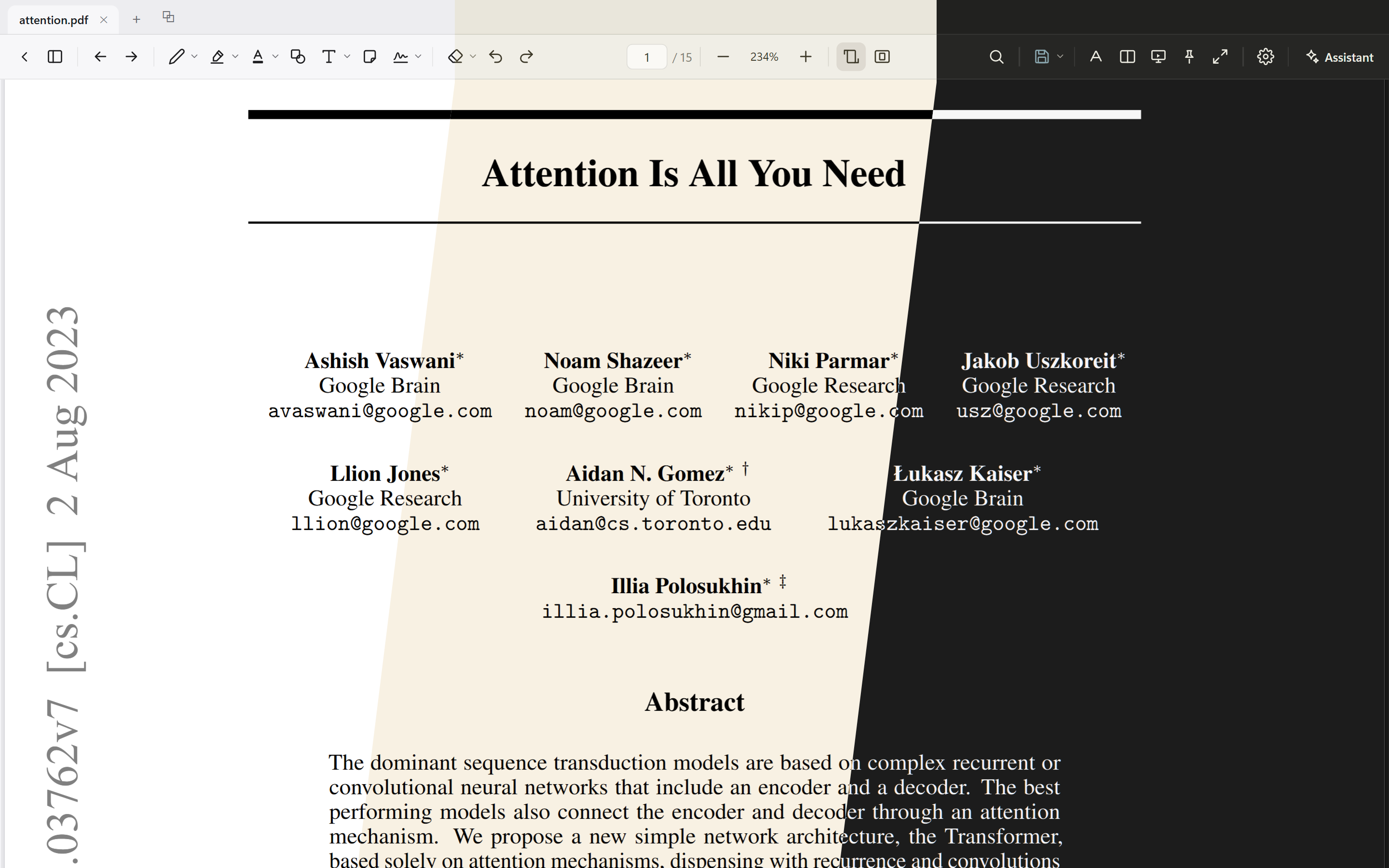
Undistracted reading
The frame above is one window shown in three of the four reading modes — Day, Tint (a light paper tone: the classic Sepia cream, or gray, green, blue or sand) and two dark modes, the second with higher contrast — plus Auto, which follows the system. Night has its own dark tones and can keep pictures in their original colours; a slider sets the strength, and the toolbar follows the chosen tone.
- Table of contents, thumbnails and bookmarks in one panel, and a page field in the toolbar that jumps straight to a page number.
- Internal links and cross-references can be followed and returned from — back/forward buttons hold the navigation history. Every file reopens where you stopped reading.
- Zoom centres on the cursor or pinch point, and one button toggles fit-width and whole-page. Pages can be rotated, read as a two-page spread, or shown one at a time in full-screen presentation mode.
- Documents open in tabs and separate windows; a tab drags out into its own window. Going back to the library closes nothing — open documents stay in the tab strip, one click from where you left them.
- The toolbar can be unpinned; the page then fills the window, and the toolbar and panels return on hover at the window edges.
- The interface is in Norwegian or English; the choice also applies to the AI prompts, exports and dates.
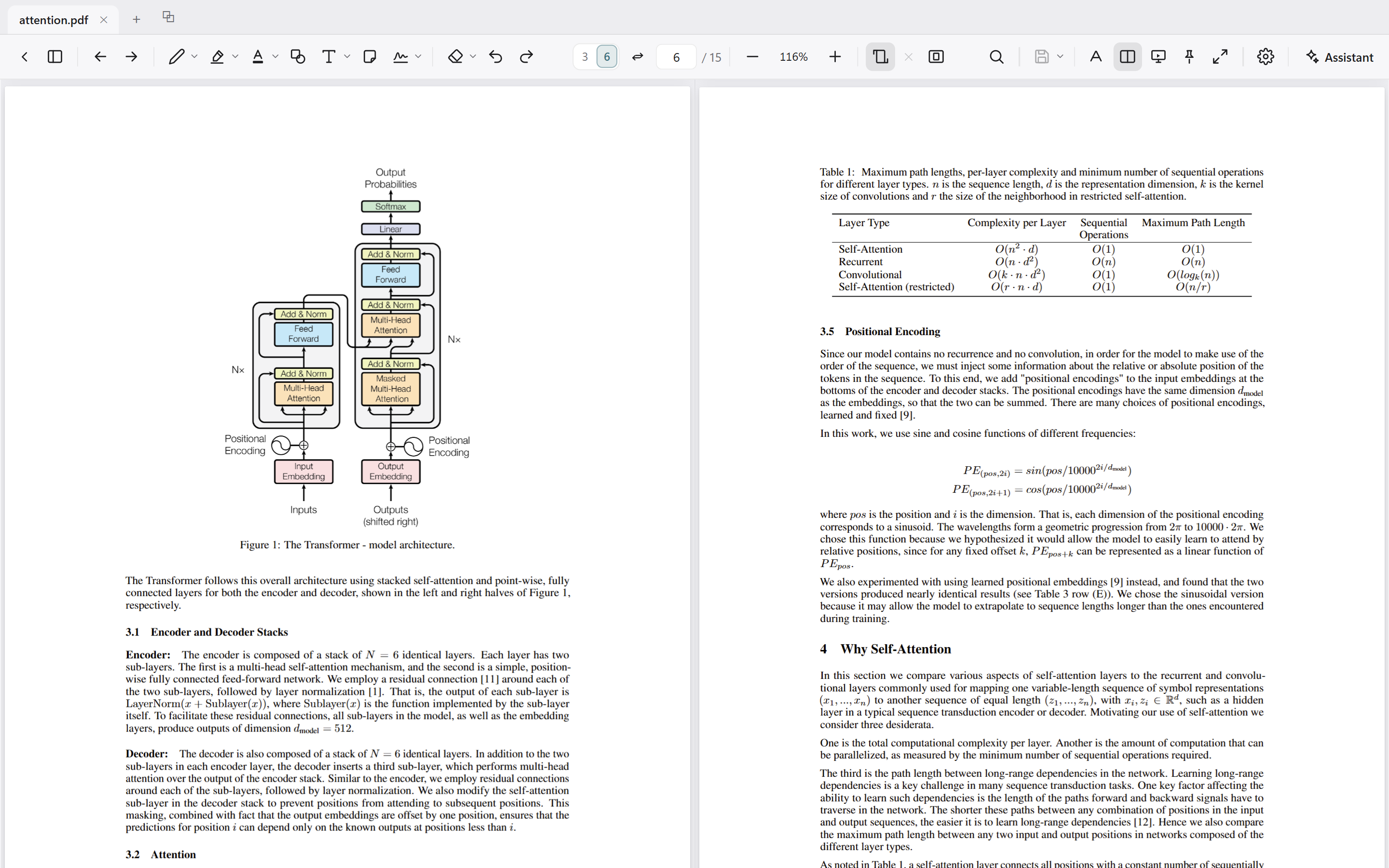
Two pages at once
A table or figure often sits on one page and the text that discusses it on another. The S key opens a second column of the same document — or of another one, so two papers can be read side by side.
- Each column has its own page, zoom and rotation, so a landscape table can sit upright beside portrait text.
- Ctrl+click on an internal link opens its target in the other column, keeping the current page in view.
- The second column can hold another document — drag its tab into the view, or choose it under “Open in split view” in the view menu — and each column annotates its own file; with one document open, a mark appears in both columns.
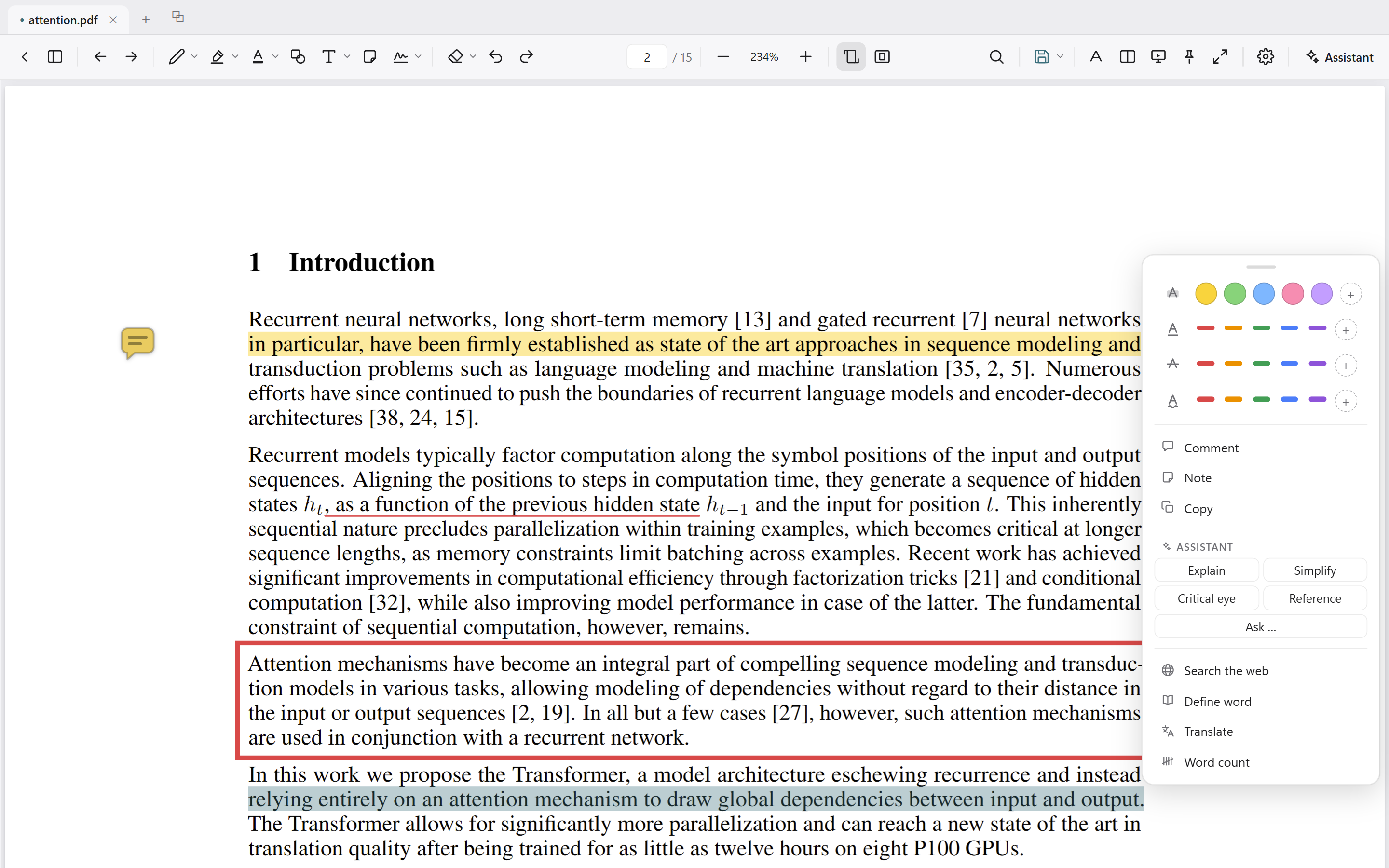
Annotating while you read
Selecting text opens the annotation menu at the selection — highlight, underline, a comment, or a question for the assistant. The toolbar carries the same tools, with colour, thickness and opacity set per tool and remembered between sessions.
- A notes panel lists every mark by page, with search and colour and type filters; comments are edited directly in the list, and a click goes to the mark. A summary — highlighted text included — exports to Word, Markdown or HTML.
- Comments can be shown in the margin as visible text beside the page, each with a leader line to its passage. An export produces a print-ready copy with the comments set in a widened margin, numbered at their anchors.
- Existing marks can be adjusted rather than redrawn: the ends of a highlight, the corner of a shape.
- With a stylus, the pen draws while a finger scrolls; pen pressure varies the line width (beta) and is preserved in the saved file.
- The text tool uses the PDF's standard typefaces — Helvetica, Times or Courier, bold and italic — so the text remains searchable in any reader. A signature can be drawn once and stamped where needed.
- Edits are held in a draft until you save; what is saved is standard PDF annotations, which open correctly in other readers — Zotero included. A document from a Zotero library also gets a Zotero section in the save menu: show the item in Zotero, or copy its citation, reference or BibTeX entry.
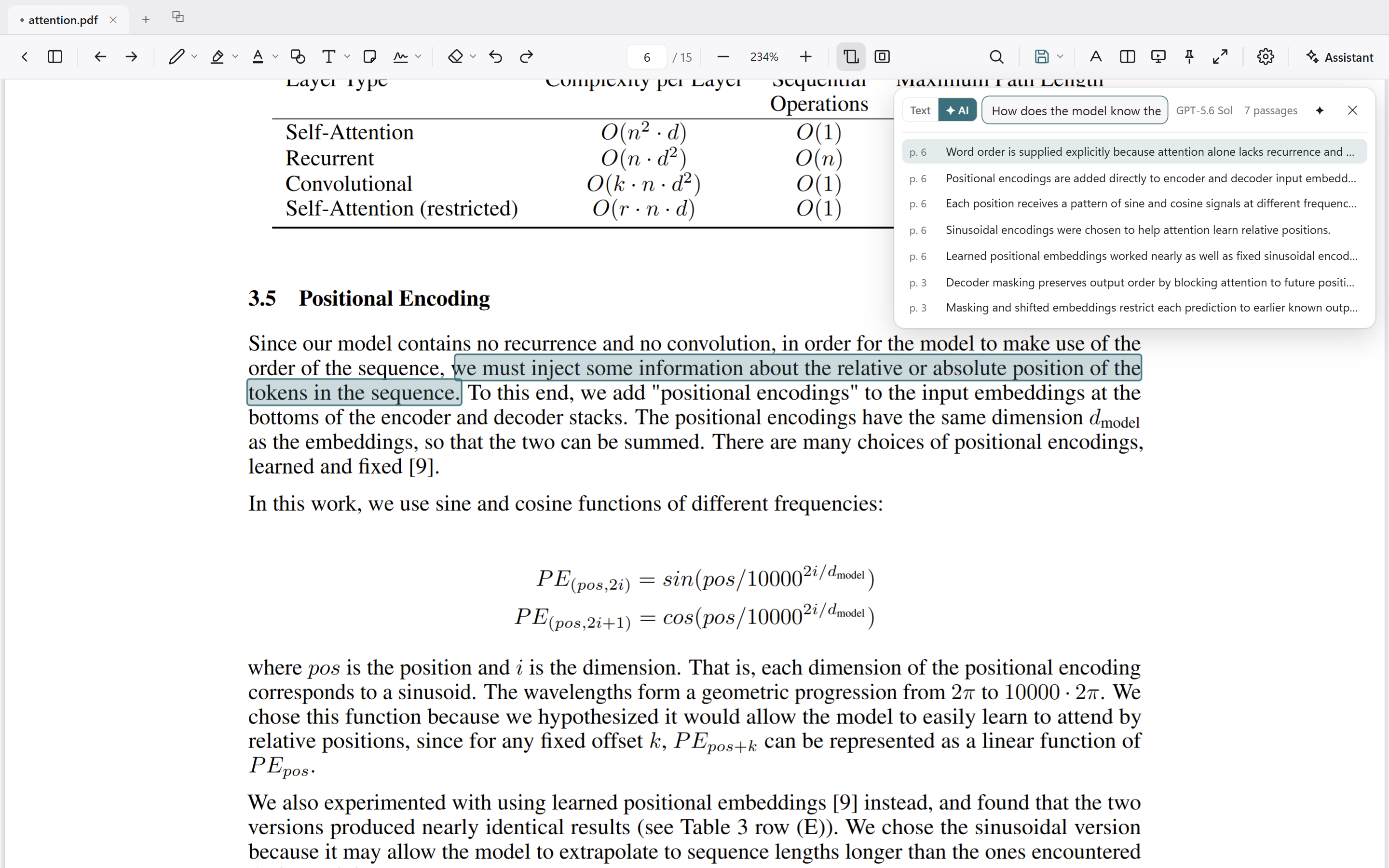
Search by words or by meaning
Both modes live in one search bar, a tab apart.
- By words: match case, whole word, a results list with excerpts, and every match marked on the page.
- By meaning: describe a topic in your own words and get the passages that discuss it, ranked. This mode uses the assistant's key.
An assistant that cites its sources
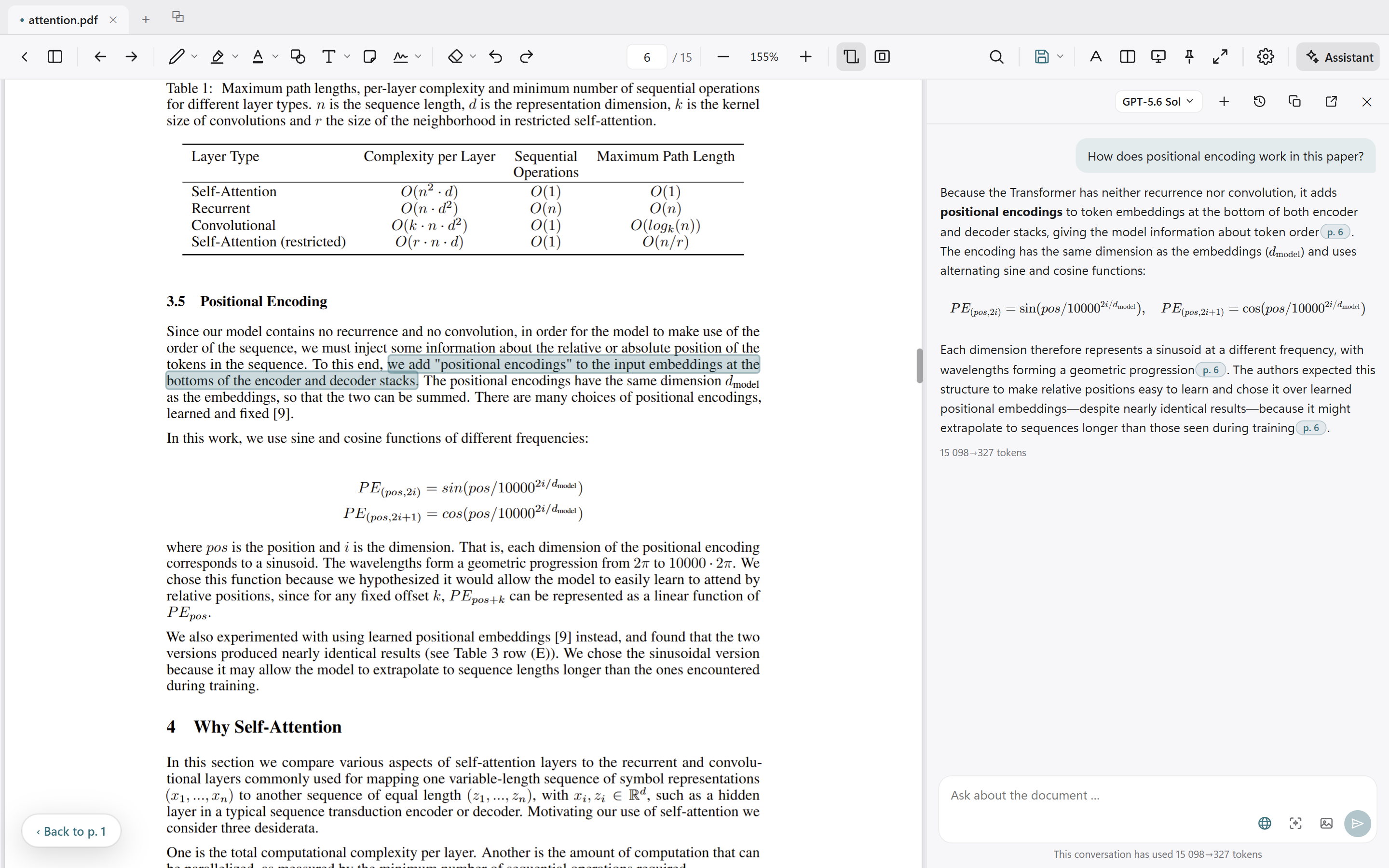
Optional, and it runs on your own API key. Each claim carries a reference, and following it goes to the passage the claim came from.
- Structured article summaries: research question, method, data, findings, limitations.
- A figure or table can be cropped into the chat and asked about.
- Questions about your own annotations — “summarize what I've highlighted”.
- The assistant can open in its own window, so the document keeps the whole screen; a citation click still goes to the passage in the window showing the document.
- Providers: OpenAI, Claude (Anthropic), Google Gemini, Azure OpenAI, OpenRouter, Grok (xAI), Mistral and Groq, one key field each — or any OpenAI-compatible endpoint and local models via Ollama or LM Studio, with no key. Each answer reports the provider's token count.
Shortcuts you can rebind
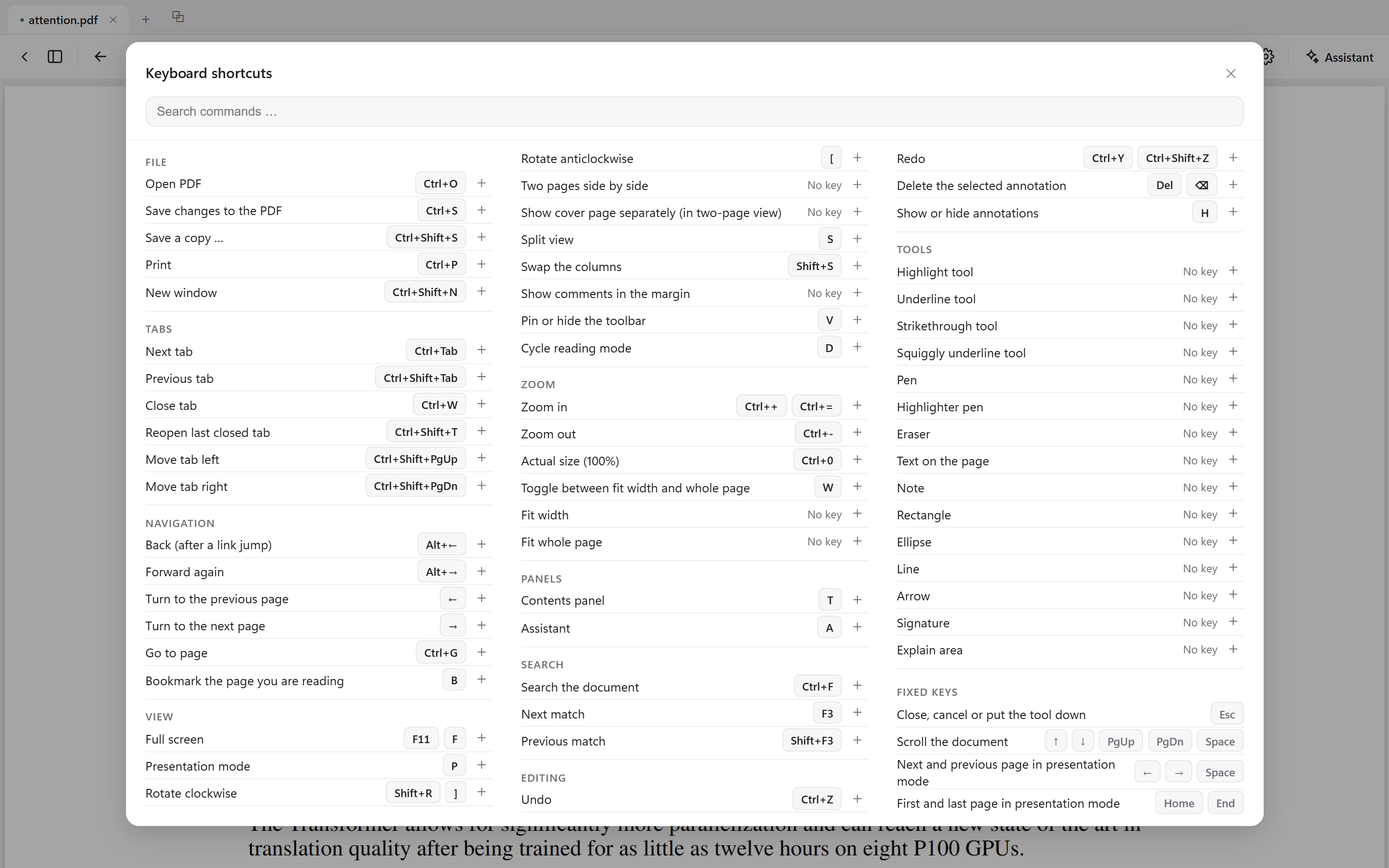
Every command is listed in one map in settings, grouped by task, with its keys beside it. Any shortcut can be rebound or reset — one key or all at once.
Local by default
Reading, annotating and saving are entirely local; the app runs without network access.
Assistant requests go directly to the provider you chose — there is no intermediary server — under your key and that provider's terms. The key is stored in the platform's own key store: DPAPI on Windows, Keychain on macOS, the system keyring on Linux. The privacy notes have the per-platform detail.
An AI action sends document content — normally the whole text, an excerpt for very long documents — and some actions fire on one click. An AI access switch in settings can ask before a document is first shared with a provider — naming the model and what is about to be attached — or block AI requests entirely.